
Multi-Operation Sheet Metal Parts: How to Buy One Finished Part Instead of Managing Five Shops
On the print it's one part. To your supply base it's five jobs, five schedules, and five quality systems. Here's where multi-operation sheet metal parts go wrong, and how to buy them as one finished part.
Last reviewed: September 29, 2026
On the print, it is one part. To your supply base, it may be five separate jobs. The blank is laser cut at one shop and formed on a press brake, sometimes at a second shop. It is welded to a frame at a third, powder coated at a fourth, and then someone presses in hardware, assembles, and packs it. Every shop does its step well. The problems show up in between.
This guide is for OEM purchasing managers, supply chain leads, and operations teams who are responsible for fabricated sheet metal parts and assemblies. It covers why multi-operation parts are harder to buy than their price suggests, what to specify so the whole chain can quote and build them correctly, and how to take over a part that is already running through a tangled supply chain.
Key takeaways
- The difficulty is in the handoffs, not the operations. Laser cutting, forming, welding, and coating are all mature processes. Tolerance stack-up, spec ownership, and scheduling between shops are where parts go wrong.
- Someone has to own the finished part. If no one is responsible for the part as it arrives at your dock, your buyer ends up being responsible for it by default.
- Design decisions made before quoting set most of the cost. Bend reliefs, hole placement, weld method, and masking callouts affect every downstream operation.
- A running part can be moved without a line-down. It takes a documented cutover: prints, fixtures, work in process, bridge inventory, and a PPAP on the finished part from the new chain.
What a multi-operation sheet metal part actually involves
A typical fabricated steel assembly, such as an equipment guard, housing, bracket assembly, or control enclosure, might go through most of these steps:
- Laser cutting or turret punching the flat blanks
- Deburring or edge finishing
- Inserting threaded hardware such as self-clinching nuts, studs, and standoffs
- Forming on a press brake
- Welding to other formed parts or to a tube frame, then grinding and cleaning the welds
- Pretreatment and powder coating, with masking for threads, grounding points, and mating surfaces
- Final assembly of gaskets, hinges, latches, labels, or purchased components
- Packaging that protects the finish in transit
Some fabricators can do several of these under one roof, but few do all of them well at a competitive cost. Powder coating, hardware insertion, and specialty welding are often subcontracted even when the quote comes from a single shop. The real question is not how many shops touch the part. It is who is accountable for the finished part.
Common multi-operation sheet metal parts
These are some of the parts OEMs most often buy as finished multi-operation assemblies. Each one touches several processes, and often several shops, before it is ready to install.
Machine guards and safety guards
Solid or perforated sheet panels, sometimes with expanded metal or wire mesh inserts, are laser cut and formed. They are welded to a tube or angle frame, powder coated (often safety yellow), and fitted with hinges, mounting tabs, or interlock brackets. Guard fit depends on hole location after welding, so inspecting the finished part matters.
Electrical and control enclosures
Blanks are laser cut with cutouts for switches, displays, and cable entry. Self-clinching nuts and studs are installed, then the parts are formed, seam welded, and ground. After powder coating with masking on grounding points, the enclosure is fitted with gaskets, hinges, and latches. Masking and hardware sequence decide whether an enclosure arrives ready to wire or needs rework first.
Mounting brackets and bracket assemblies
Brackets are laser cut and formed, then often welded to a plate, tube, or second bracket, and finished with zinc plating or powder coat. They look simple, but they are often where tolerance stack-up first shows up, because they locate other components on your assembly.
Equipment housings, covers, and access panels
Housings are cut and punched with louvers or vents, formed, welded or riveted at the corners, and coated. Hardware for hinges, quarter-turn fasteners, or removable panels is installed last. Cosmetic finish and packaging matter because these are the parts your customers see.
Fan housings and ventilation components
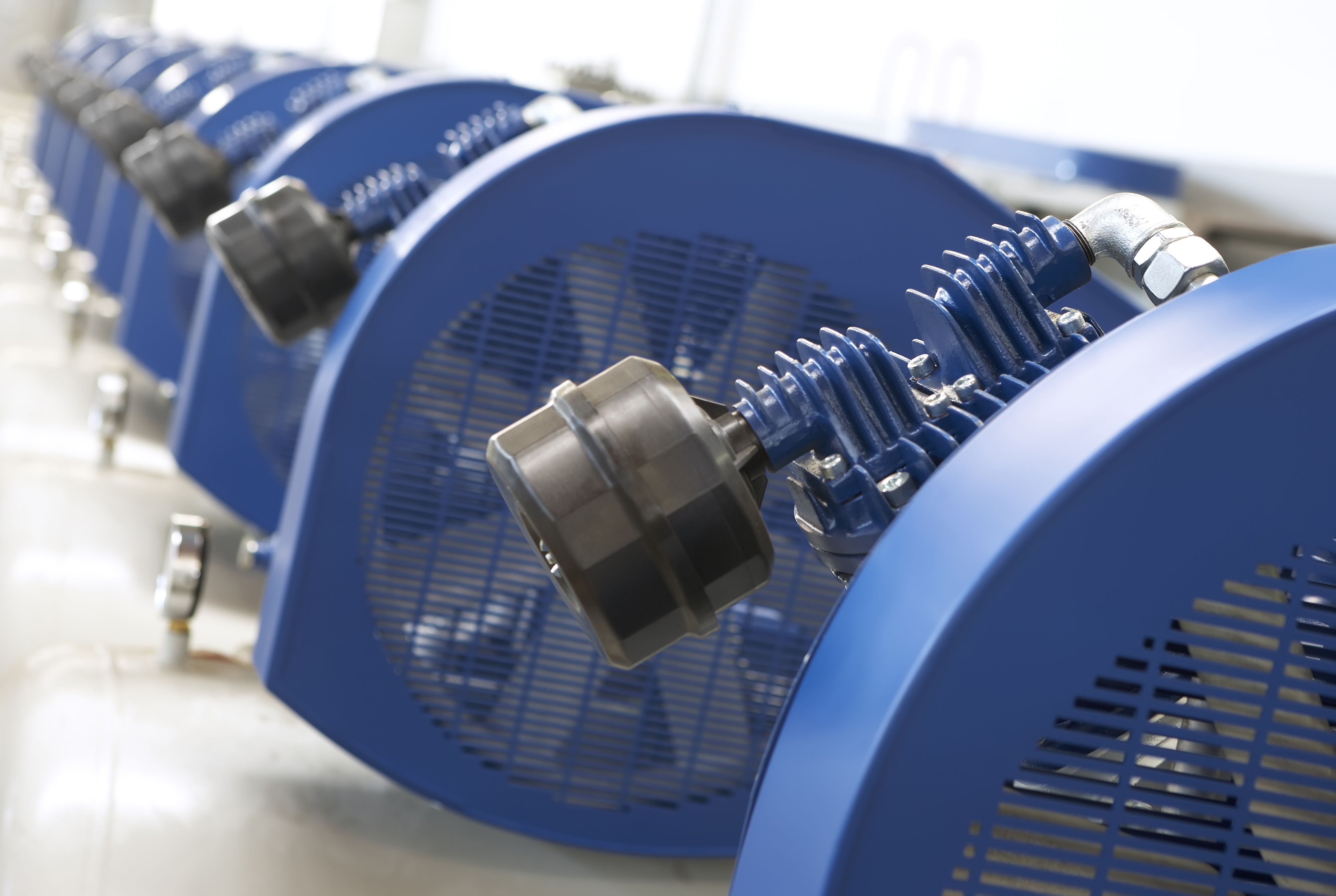
These parts are made from galvanized or coated sheet. The sheet is cut, rolled or formed, and joined by welding, riveting, or clinching, and may then be painted or coated. They are common on agricultural, industrial, and HVAC equipment, where corrosion resistance and consistent fit across many units are what count.
Welded equipment frames and bases
Tube or structural members are saw cut, sometimes bent, and welded in a fixture with laser cut gussets, mounting plates, and sheet panels. The frame is then powder coated or painted. A frame is the foundation the rest of your product bolts to, so squareness and hole position after welding matter most.
Carts, racks, and material handling fixtures
These combine a welded tube frame with formed sheet shelves or trays, powder coat, and assembled casters, handles, or dividers. They bring together bent tube, sheet metal, welding, coating, and assembly in a single part.
Parts that combine tube bending, aluminum extrusions, or castings with sheet metal follow the same principle. See our manufacturing and fabrication services for the full range of what we coordinate.
Why these jobs are hard for procurement teams
Tolerances stack up across shops
Each operation adds its own variation. A blank that is in tolerance, bent at a slightly different angle, then pulled by weld heat, can produce an assembly that is out of tolerance even though every shop passed its own inspection. When the shops only measure their own step, nobody measures the part the way your line uses it.
No one owns the specs between operations
The coater assumes the welds were ground and cleaned. The welder assumes the hardware will go in after coating. The hardware installer assumes the threads were masked. Specs that sit between two operations, like weld finish before coating or masking of inserted hardware, get lost because they belong to neither shop's scope.
Scheduling runs on the slowest link
Your release date depends on the longest lead time in the chain plus every transit leg. When one shop slips a week, every downstream shop has to reschedule, and your buyer is the one making the calls.
Engineering changes have to reach every shop
A revision to one hole location may affect the laser program, the brake setup, the weld fixture, and the masking plan. If the new revision reaches three of the four shops, you get parts built to two different revisions, and nobody finds out until assembly.
Quotes are hard to compare
One supplier quotes the finished part. Another quotes fabrication and lists coating as "by others." A third quotes coating per pound. Comparing them fairly takes real work before you even look at price.
Where multi-operation parts go wrong, and who should own each risk
| Handoff | What typically goes wrong | Who should own it |
|---|---|---|
| Cutting to forming | Blank dimensions or grain direction don't suit the bend sequence; holes near bends distort | Design review before the first blank is cut |
| Forming to welding | Small angle variation gets locked in by the weld fixture; weld heat pulls the part out of square | Whoever owns inspection of the finished part |
| Welding to coating | Spatter, sharp edges, or unground welds show through the powder; trapped moisture causes adhesion problems | A written weld-finish spec that both shops agree to |
| Coating to hardware and assembly | Powder in threads or on grounding points; hardware installed before coating gets coated shut | A masking plan tied to the drawing revision |
| Shop to shop, every leg | Freight damage, lost pieces, mixed revisions, parts sitting between pickups | One party scheduling and paying for every move |
An illustrative example: a powder-coated equipment guard
This is a composite example based on the kind of work we see, not a single customer's part.
An OEM builds a machine that ships with a steel guard: a welded tube frame with three formed sheet panels, threaded inserts for mounting, and a textured powder coat. The part had been built through four vendors. The buyer placed separate orders for tube, blanks, fabrication, and coating, then arranged freight between them.
The recurring problems were familiar. Mounting holes sometimes didn't line up with the machine because the panels were formed at one shop and welded at another. Powder got into the threaded inserts about once a release, which meant chasing threads on the assembly line. Coated parts arrived scuffed because they were shipped in the fabricator's packaging, which was never meant for finished goods. When something went wrong, each vendor could reasonably point to someone else.
Moving the part to a single coordinated supply chain changed a few specific things:
- A design review moved two holes away from bend lines and added a masking callout for the inserts on the drawing itself.
- The welding shop checked hole positions in the fixture, so the part was measured the way the machine uses it.
- The weld-finish standard was written down once and shared with both the welder and the coater.
- Packaging was specified for coated parts, and freight between shops was scheduled by one party.
- The buyer went from four purchase orders and four schedules to one of each.
No single operation got dramatically cheaper. The savings came from fewer rejected parts, less line-side rework, less buyer time, and no more arguments about whose fault it was.
Where design support pays off
Most of the cost of a multi-operation part is set before anyone quotes it. A short design review, ideally before the print is released, often catches issues that would otherwise cost money on every release:
- Hole-to-bend distance and bend reliefs, so features don't distort in forming
- Tab-and-slot construction in place of loose parts in a fixture, which can locate panels for welding and reduce fixture cost
- Material and gauge selection, so the part isn't heavier or more expensive than it needs to be (see our sheet metal gauge charts)
- Weld method and weld callouts that match what the part actually needs, rather than welding everything continuously by default
- Masking and hardware sequence called out on the drawing, so the coater and assembler are working from the same instructions
The goal is not to redesign your part. It is to keep what the part has to do, and make it easier and more consistent to build.
Taking over a part that is already running
Many multi-operation parts are not new. They are running today, just not well. Moving a live part to a new supply chain without interrupting your line takes a documented cutover. Before you move, confirm these items:
- Current prints and revision. Check that the print matches what the shops are actually building. They often differ.
- Tooling and fixture ownership. Weld fixtures, special brake tooling, and laser programs may belong to you, to a vendor, or to no one on paper.
- Work in process at every shop. Know what is sitting at each vendor and at what stage, so nothing is stranded or built twice.
- Bridge inventory. Build enough stock on the current chain to cover the new chain's PPAP and ramp-up.
- PPAP on the finished part. Approve a complete, finished part from the new chain, not just the individual operations, before you cut over a production release.
- A defined cutover release. Pick the specific order where the new chain takes over, and make sure everyone knows the date.
What to send a supplier to quote a multi-operation part
You will get better quotes, and quotes that are easier to compare, if you give every supplier the same package:
- The drawing with its current revision, plus a 3D model and flat pattern if you have them
- Material, gauge, and any certification requirements
- Finish specification, including color, texture or gloss, pretreatment, and any film thickness or salt-spray requirement
- A hardware and purchased-component list, with approved brands if you require them
- Your estimated annual usage and how you expect to release orders
- Packaging and delivery requirements
- For a running part, what's going wrong today. That tells a supplier more than the print does.
Then ask every supplier to quote the finished part delivered to your dock, so each quote covers the same scope.
How Chapman Smith handles multi-operation parts
Every operation. One purchase order. Delivered ready for your application.
Chapman Smith Corporation has been sourcing materials and coordinating manufacturing for OEM customers for 30 years from Warsaw, Indiana. We don't run fabrication equipment ourselves. Our job is to take responsibility for the finished part and coordinate every step that goes into it, from cutting through coating and assembly, so what arrives at your dock is ready to go into your product. On a multi-operation job, that means:
- We select and qualify the shops for each operation, matched to your part rather than to whichever shop quoted first.
- Our sales team provides design support. They work with your engineers to get you the part you want, keeping manufacturability and function at the forefront from the first conversation.
- We run PPAP before you do. Chapman Smith completes its own PPAP on the finished part first, so the part you evaluate has already been screened. Your team still runs its own PPAP, but you start from a part we have already approved.
- We schedule and manage freight between every shop in the chain.
- We hold inventory at our Warsaw warehouse and manage releases, so parts arrive when your line needs them.
You place one purchase order and deal with one contact, and one party is responsible for the finished part. We take on new parts and running parts, and we judge fit by the part and its potential rather than a minimum order size. Learn more about our manufacturing and fabrication coordination or the kinds of companies we work with.
If you have a sheet metal part that takes too many vendors, too many phone calls, or too much rework, send us the print and tell us what's going wrong. We'll tell you how we would build it.
Frequently asked questions
What is a multi-operation sheet metal part?
It is a fabricated part that needs several distinct processes to become finished. Common steps are laser cutting, forming, hardware insertion, welding, powder coating, and assembly. These operations are often done at different shops.
Should one supplier be responsible for a multi-operation part?
For production parts, usually yes. Making one party accountable for the finished part removes the gaps between shops where tolerance, spec, and scheduling problems start. That party does not have to perform every operation itself. It has to own the result.
Why are my fabricated parts out of tolerance when every shop passes inspection?
Variation from cutting, forming, and welding stacks up across operations. If each shop only inspects its own step, no one measures the finished part the way your assembly uses it. Inspection of the finished part, including in the weld fixture, catches this.
Who should do PPAP on a part built across several shops?
The party responsible for the finished part should complete PPAP on the finished part, not on each operation separately. At Chapman Smith, we run our own PPAP first, and then the customer performs its PPAP on a part that has already been screened.
How do I keep powder coat out of threads and grounding points?
Call out masking on the drawing, and decide whether hardware goes in before or after coating. Make sure the coater is working to the same drawing revision as the fabricator.
Can I move a part to a new supplier without shutting down my line?
Yes. Confirm the current revision, identify who owns the tooling and fixtures, account for work in process, build bridge inventory, and approve PPAP on a finished part from the new supply chain before cutting over a specific release.
Related Articles

Excess Prime & Secondary Steel: How OEMs Buy Steel for Less
September 21, 2026
What excess prime and secondary steel are, how they differ, where the savings come from, and how OEM buyers can use them safely in production.

What Custom Aluminum Extrusions Really Cost for Production Parts
September 16, 2026
Your extrusion quote looked great. Then the cutting, punching, finishing, and freight showed up on four other invoices. Here's how to price the whole part.
Is Your Fabricator's Capacity Still Yours? What OEM Buyers Should Watch in 2026
September 10, 2026
Your fabricator's lead times are slipping and no price index explains why. Five signals OEM production buyers should check on their own supply base.